Automatic cars have gained popularity over the years as technology advances, putting them ahead of manual cars.
However, auto enthusiasts are still uncertain and confused about these vehicles’ inner workings. One question has come up is whether or not automatic cars have flywheels.
This is a valid question since the major difference between these two cars is the transmission, but what about the other components?
The short answer is NO; Automatic cars don’t need a flywheel to function properly. However, some Automatic racing cars come with a flywheel-like component called a flex plate that performs the same function as a flywheel.
Continue reading to learn what a flywheel does and why it isn’t needed in automatic cars.
What is a flywheel?
You need to understand the role of a flywheel in a manual vehicle before you can decide whether or not you need one.
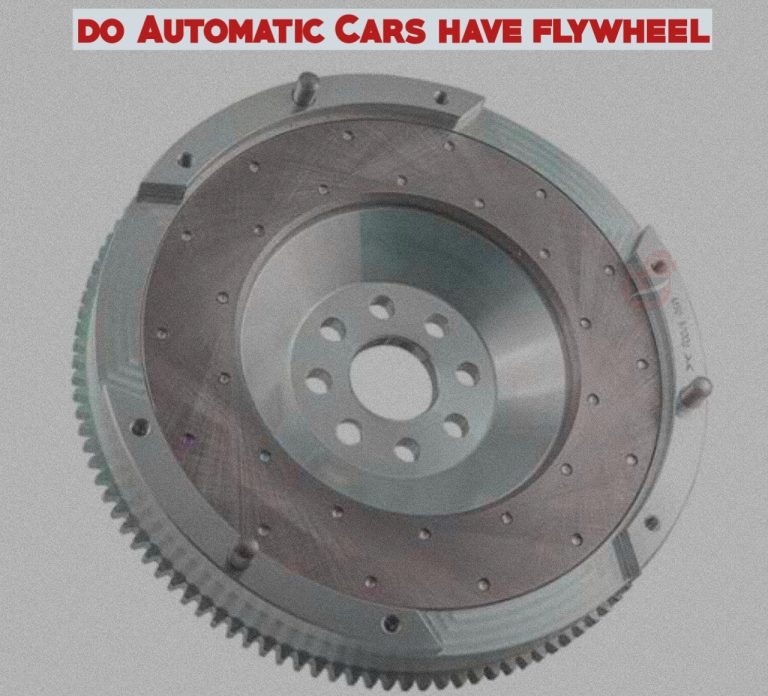
A flywheel is a mechanical device that stores rotational energy and helps the engine maintain speed and smooth delivery.
Manual cars with internal combustion engines have the flywheel connected to the crankshaft to maintain consistent engine speed by storing the kinetic energy from each combustion stroke.
Also, the flywheel aids in changing gears during acceleration. It helps maintain constant engine speed while switching between gears. This rules out stalling or jerking during the process.
In an automatic car, the flywheel is not needed for proper functioning because they don’t use an internal combustion engine.
Instead, they are equipped with electric motors powered by charged batteries to aid in driving the vehicle.
Do Automatic Cars Have a Flywheel?
So, to answer the question of whether or not automatic cars have flywheels, the answer is no.
Automatic cars do not use an internal combustion engine to power the vehicle and, therefore, do not require a flywheel to store and smooth out power delivery.
Instead, they use electric motors, which can provide smooth, consistent power to the wheels without needing a flywheel.
It’s also important to note that the absence of a flywheel does not mean that automatic vehicles won’t perform well or aren’t safe for use.
Electric motors can provide smooth and consistent power to the wheel without needing a flywheel.
Due to the modern transmission systems, Automatic cars are improved in performance and efficiency compared to vehicles with traditional internal combustion engines.
However, Flywheels might be present in some Automatic racing cars, but they’re referred to as a “flex plate.”
They function similarly to the traditional flywheel. The major difference is the build and where it’s located in the vehicle.
In addition, there might also be a component called the torque converter, which functions just as a clutch in manual cars.
It is also worth noting that some cars may use a hybrid powertrain, which combines an internal combustion engine with an electric motor.
FAQs
What is a flywheel called on an automatic?
A flexplate or flex plate is to automatic cars as a flywheel is to manual cars. It connects the engine’s output to the torque converter’s input, a clutch in automatic cars.
Conclusion
Automatic vehicles do not have flywheels. Instead, they use electric motors with advanced transmission systems to move the car.
It’s also important to note that the absence of a flywheel does not alter the performance or safety of the vehicle but even makes it more efficient than some cars running on internal combustion engines.
As an Amazon Service LLC Program Associate, V. Auto Basics earns from qualifying purchases. See Our Affiliate disclaimer.
